

Commercial Grade Athletic Field Equipment Suppliers
Posted by Editorial Team on Oct 21st 2026
Table of Contents
- What Commercial Grade Athletic Field Equipment Suppliers Actually Deliver
- Sports Field Construction Equipment: What You Need Before the First Whistle
- Baseball Field Maintenance Equipment That Holds Up Season After Season
- Track and Field Equipment Suppliers: Sourcing for Competition and Training
- School Athletic Equipment: Buying for Districts, Colleges, and Rec Programs
- How to Evaluate Commercial Grade Athletic Field Equipment Suppliers
- Conclusion
- Frequently Asked Questions
Last Updated: October 21, 2026
What Commercial Grade Athletic Field Equipment Suppliers Actually Deliver
Commercial grade athletic field equipment suppliers provide the durable tools, machines, and materials that grounds crews use to build, mark, and maintain playing surfaces for schools, parks, colleges, and stadiums. This guide from AchillionSports breaks down what each supplier category should stock, how to compare vendors, and where buying decisions go wrong.
The core distinction is simple: consumer gear is built for a backyard season, while professional-grade equipment is built for a maintenance calendar. Field marking machines, drag mats, infield clay, and turf conditioners take repeated use from paid grounds crews. When a supplier's catalog mixes hobby-grade items into a commercial lineup, the buyer usually finds out in month three, not week one.
A common mistake is shopping by unit price alone. A cheaper drag mat that frays after one season costs more than a heavier one that lasts several. Total cost of ownership, not sticker price, is the number that matters.
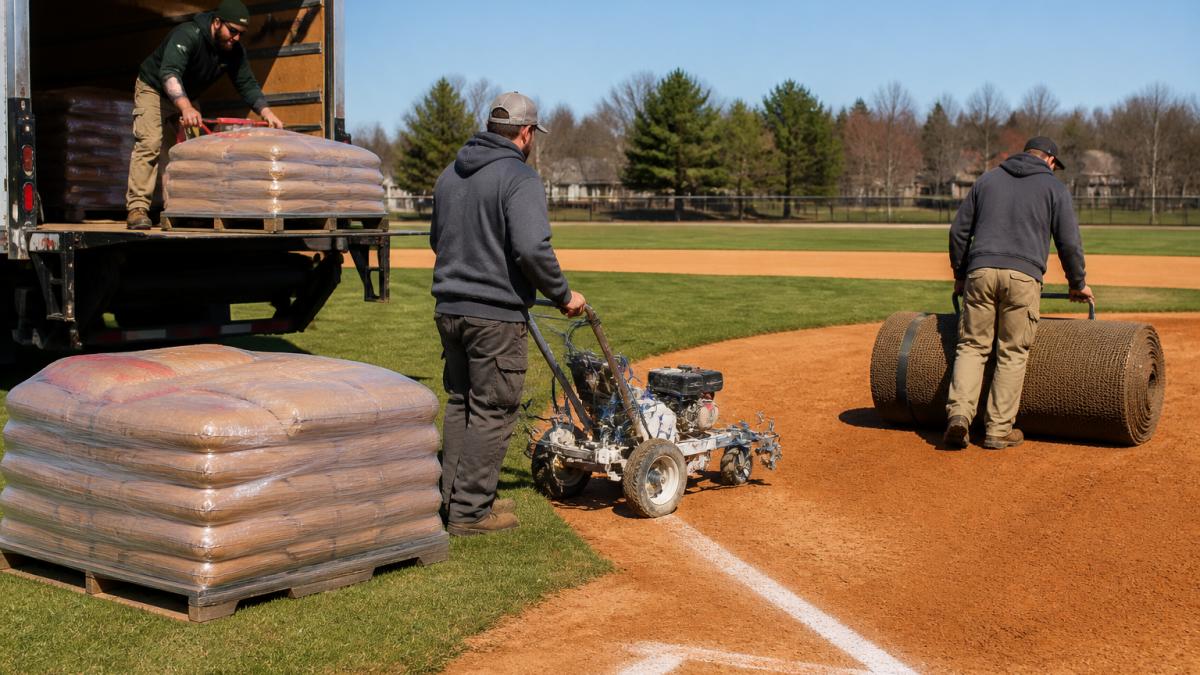
Sports Field Construction Equipment: What You Need Before the First Whistle
Sports field construction equipment covers the tools used to prepare a site and build a playable surface: tampers and compactors, laser levels, grading tools, drainage components, and turf conditioners. Getting this phase right determines how the field performs for the next decade.
Construction and renovation projects usually need:
- Compaction equipment for sub-base preparation before sod or turf goes down
- Laser levels and grading tools to hit proper drainage slope
- Drainage and moisture management components to prevent standing water
- Field drags and turf conditioners for final surface finishing
- Marking powder and chalkers for the first layout
The procurement angle most buyers miss: construction equipment is often a one-time purchase, so rental versus purchase deserves a real calculation. If your district builds one field every several years, renting compaction gear may beat owning it. If you maintain multiple facilities, owning pays off.
Baseball Field Maintenance Equipment That Holds Up Season After Season
Baseball field maintenance equipment is the category where cheap gear fails fastest. Infield clay, mound clay, drag mats, tampers, moisture absorbents, and marking machines all take heavy, repeated use across a long season.
The essentials for a baseball or softball program:
- Infield clay and mound clay matched to your soil type
- Drag mats and field drags for smoothing the surface between games
- Tampers for mound and plate area repair
- Moisture management products and absorbents for rain delays
- Field marking chalkers and marking powder for foul lines and batter's boxes
What most guides miss is soil compatibility. Infield clay that doesn't match your existing mix can create a surface that drains poorly or hardens unevenly. Ask suppliers whether they can advise on clay selection for your region's climate, and treat that answer as a service-quality signal.
Track and Field Equipment Suppliers: Sourcing for Competition and Training
Track and field equipment suppliers stock the gear that meets competition and training needs: starting blocks, hurdles, steeplechase equipment, long jump and high jump components, and landing pits. Sourcing here splits into two tracks, competition-grade and training-grade, and the two should not be confused.
Competition-grade equipment must meet the specifications your sanctioning body and meet officials expect. Training-grade equipment prioritizes durability and volume, since it takes constant use from athletes of varying skill. A supplier that can't tell you which tier a product belongs to is a supplier you should question.
Landing pits and high jump systems deserve special attention. These are safety-critical components, and the supplier should be able to document standards compliance and provide installation guidance. For schools and colleges, that documentation often becomes part of the facility's own records.
School Athletic Equipment: Buying for Districts, Colleges, and Rec Programs
School athletic equipment purchasing runs on budget cycles, procurement rules, and delivery deadlines. Districts, colleges, and municipal recreation programs need suppliers who understand public purchasing, not just product catalogs. Most supplier pages stop at "we serve schools", the useful depth is in how the purchase actually clears.
Know which purchasing lane you are in. Public institutions typically buy through one of four routes, and the supplier must be set up for the one you use:
- Competitive bid or request for proposal (RFP), required above your institution's dollar threshold; the supplier must be able to submit itemized quotes, spec sheets, and certificates with the bid.
- Cooperative purchasing contracts, pre-negotiated agreements that let districts piggyback on already-competed pricing. Ask whether the supplier holds a current contract with a cooperative your institution is eligible to use; this can shorten the cycle from months to weeks.
- State or local term contracts, awarded pricing that your procurement office can order against directly.
- Small-purchase or petty-cash thresholds, for accessories and replacement parts below the bid limit, where speed matters more than competition.
Documentation that should arrive with the quote. For institutional buyers, three practical requirements separate a good supplier from a great one:
- Compliance and warranty terms in writing you can attach to a purchase order, product certifications, safety documentation for safety-critical items like landing pits and goal systems, and warranty language that survives your legal review.
- Delivery scheduling tied to a fixed season start, with a committed date rather than a vague window, plus clarity on who pays freight and who handles receiving.
- Payment and financing terms that fit how your institution budgets, purchase orders, invoicing on delivery, or installment options for capital items that fall outside the current fiscal year.
A realistic timeline. A common pattern for a district buying field equipment: specification and quote gathering (two to four weeks), procurement review and bid or contract check (two to six weeks depending on threshold), award and purchase order (one to two weeks), then lead time and delivery (varies by product, often several weeks for made-to-order items). Suppliers who can compress the quote-and-documentation stage are worth more than a lower sticker price.
At AchillionSports, we work with schools, gyms, rec centers, and park districts on equipment ranging from basketball hoops and volleyball systems to bleachers and team shelters. Our financing options, including Approve, Paytomorrow, and Full Circle, exist because institutional budgets rarely line up neatly with equipment needs. We also offer free shipping on many orders and can help source hard-to-find items.
For institutional buyers, the supplier relationship matters as much as the product. Confirm the purchasing lane, get compliance and warranty documents with the quote, and lock a delivery date, those three steps decide whether a project stays on schedule.
How to Evaluate Commercial Grade Athletic Field Equipment Suppliers
Evaluating commercial grade athletic field equipment suppliers comes down to five criteria: product scope, build quality documentation, delivery and fulfillment, after-sales support, and total cost of ownership. Score each supplier against all five before you commit, and score them with specifics, not impressions.
1. Product scope. Does the catalog cover field maintenance, construction, and sport-specific equipment, or only one slice? A supplier that stocks drag mats but not infield clay, or hurdles but not landing pits, forces you to manage multiple vendors and multiple delivery schedules.
2. Build quality and compliance documentation. Ask for warranty terms, product certifications, and safety documentation in writing. For safety-critical items, landing pits, high jump systems, goal systems, bleachers, confirm the product is intended for institutional use and that the supplier can provide the documentation your risk manager or insurer will ask for. A supplier that hesitates on warranty details is telling you something about how the equipment holds up.
3. Delivery and fulfillment. What are the actual lead times, and can the supplier commit to a date rather than a window? Clarify freight terms, who handles receiving, and what happens if an item arrives damaged.
4. After-sales support. Is installation guidance, repair, and replacement-part support available after the sale? For equipment that takes seasonal wear, the availability of replacement parts often matters more than the initial price.
5. Total cost of ownership. Build the number from four parts: unit price, shipping and freight, installation or setup labor, and lifecycle replacement (how often the item wears out and what a replacement costs). A cheaper drag mat that frays after one season costs more than a heavier one that lasts several.
Use this checklist:
- Does the catalog cover field maintenance, construction, and sport-specific equipment, or only one slice?
- Can the supplier provide warranty terms, certifications, and safety documentation in writing?
- What are the actual delivery lead times, and can they commit to a date?
- Is installation, repair, and replacement support available after the sale?
- Does the quote reflect total cost, including shipping, setup, and lifecycle replacement?
Evaluation Criteria | What to Ask | Why It Matters |
|---|---|---|
Product scope | Full catalog or narrow niche? | Fewer vendors to manage |
Build documentation | Warranty and certifications in writing? | Proof of professional-grade quality |
Delivery and fulfillment | Committed dates, not windows? | Season start depends on it |
After-sales support | Repair and replacement available? | Downtime during the season |
Total cost of ownership | Shipping, setup, lifecycle included? | Sticker price hides real cost |
How to score. Rate each supplier one to five on each criterion, then weight the criteria by what your facility can least afford to lose. A program with a hard season start should weight delivery heavily; a facility with limited maintenance staff should weight after-sales support. A supplier that scores well on scope but poorly on after-sales support will cost you during the season.
Ask for references from facilities similar to yours. A supplier serving comparable schools or parks can speak to your exact maintenance rhythm, and a reference call often surfaces delivery and support issues a catalog never shows.
Conclusion
Outfitting a facility means matching equipment to how your crews actually work, not just filling a cart. The right supplier brings professional-grade products, clear documentation, reliable delivery, and support that lasts past the invoice.
At AchillionSports, we stock athletic and recreational equipment for schools, gyms, rec centers, and parks, backed by premier manufacturers, flexible financing, and free shipping on many orders. Get started with AchillionSports and equip your facility with gear built to hold up season after season.
Frequently Asked Questions
What should I look for in professional athletic field equipment?
Start with build materials and warranty terms. Commercial grade athletic field equipment should use welded steel frames, UV-stabilized netting, and replaceable wear parts rather than sealed units you throw away. Ask for the warranty in writing and check whether it covers commercial use, not just residential. Confirm the supplier stocks replacement parts for goalposts, net systems, and marking equipment. Finally, verify delivery and installation terms: a low unit price means little if freight, assembly, or site prep lands on your crew.
How do I choose an athletic field equipment supplier?
Match the supplier's catalog to what you actually maintain. A vendor that carries field marking supplies, drags, tampers, and infield clay alongside bleachers and shelters saves you from juggling five purchase orders. Ask about lead times in writing, especially for custom shelters or seating, and confirm whether they handle installation and after-sales repair. Financing terms matter too: compare the down payment, the total cost across the term, and what happens if equipment arrives damaged.
Where can schools buy commercial grade sports equipment?
Districts and colleges typically buy through specialized athletic equipment suppliers, cooperative purchasing contracts, and state bid lists. Buying through a cooperative contract can shorten procurement approval, but confirm the supplier's catalog covers your specific sports. Many suppliers also work directly with athletic directors on quotes for school athletic equipment, including bleachers, team shelters, and field maintenance gear. Request references from comparable schools and check that delivery timelines fit your season start.
Do athletic equipment suppliers offer installation and maintenance support?
It varies widely, so ask before you sign. Some suppliers deliver only, leaving assembly and anchoring to your grounds crew. Others coordinate installation for bleachers, shelters, and goal systems, which matters when local safety codes and snow load requirements apply. On the maintenance side, confirm whether the supplier stocks replacement nets, padding, wheels, and marking components. A supplier that supports repair and parts after the sale keeps your fields playable instead of sidelining equipment for weeks.