

Professional Grade Team Sports Shelters: 2026 Guide
Posted by Editorial Team on Oct 11th 2026
Table of Contents
- What Makes a Professional-Grade Team Sports Shelter
- Soccer Team Shelters: Sport-Specific Design and Requirements
- Heavy-Duty Player Shelters for Year-Round Protection
- Portable Team Shelters vs. Fixed Installations
- Team Shelter Seating Capacity and Layout Options
- Frame Materials, Cover Durability, and Weather Resistance
- Safety, Anchoring, and Maintenance Best Practices
- Conclusion
- Frequently Asked Questions
Last Updated: October 11, 2026
What Makes a Professional-Grade Team Sports Shelter
A professional-grade team sports shelter is a durable, weather-resistant structure with reinforced frames, heavy-duty covers, and anchoring systems built to withstand wind, rain, and intense sun exposure, unlike temporary pop-up canopies. The difference comes down to frame strength, cover durability, and real-world performance over multiple seasons.
A quality shelter keeps bench personnel safe, protects equipment, and extends the usable season. The best professional-grade team sports shelters combine aluminum or steel frames with vinyl or polyester covers rated for UV protection and water resistance.
Soccer Team Shelters: Sport-Specific Design and Requirements
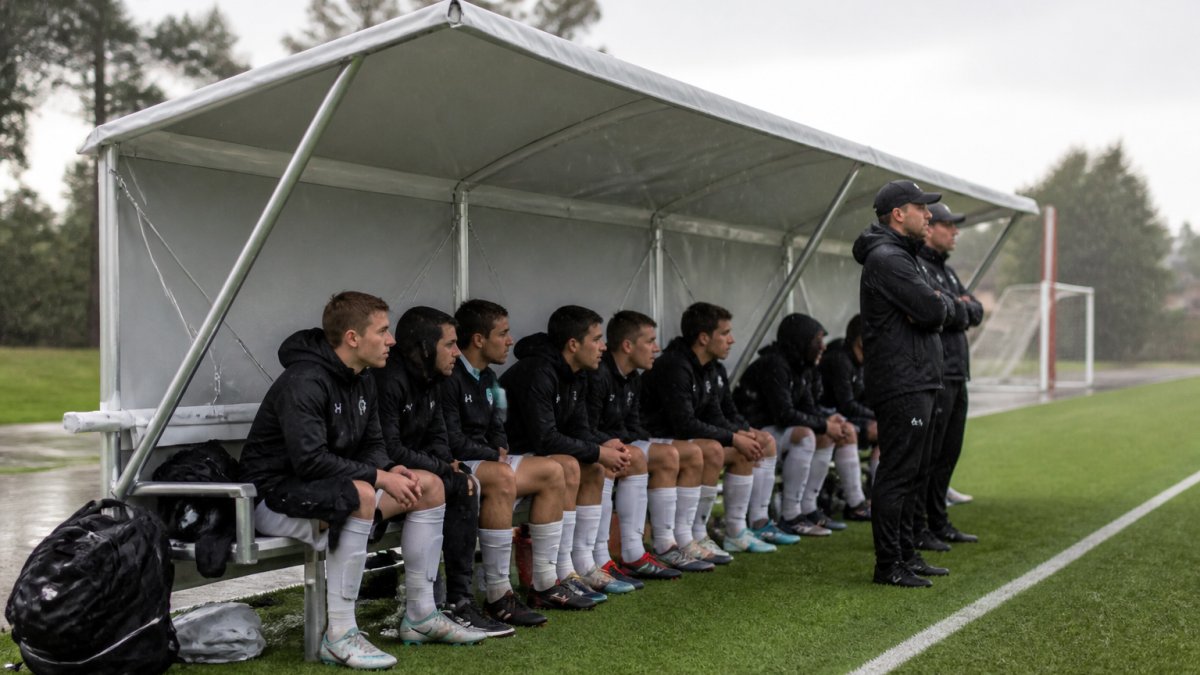
Soccer shelters must accommodate substitutes, coaches, and equipment while maintaining sightlines to the field. Position them perpendicular to the goal line for clear visibility. Most programs need shelters 10-15 feet wide to seat substitutes comfortably and allow coaches to move freely.
Soccer shelters need quick-access entry for substitutes, open sides for coach-to-field communication, and space for equipment without crowding seating. Open-frame construction with optional side panels balances these demands.
Cover material matters significantly for soccer. Use UV-stabilized polyester or reinforced vinyl rated for 500+ hours of direct sunlight annually. Soccer fields often sit in open areas, so anchoring systems must be strong.
Heavy-Duty Player Shelters for Year-Round Protection
Heavy-duty player shelters handle constant year-round use across all seasons and climates. They require thicker frame materials, reinforced joints, and covers rated for extreme weather.
Steel frames offer superior strength for heavy snow or ice but are harder to relocate. Aluminum frames work better for portable shelters that move between fields.
Use vinyl or polyester covers with reinforced stitching and grommets rated for frequent tensioning. Quality covers resist tearing, mildew, and fading after multiple seasons.
Portable Team Shelters vs. Fixed Installations
Choose between portable and fixed team sports shelters based on your facility's needs and budget. Portable shelters offer flexibility and easy repositioning; fixed installations provide permanence and durability but require site preparation.
Portable shelters use lightweight aluminum frames and set up in 15-30 minutes. They work well for multi-field facilities and traveling clubs but are more exposed to damage during storage and transport.
Fixed installations use heavier frames anchored to concrete pads. Once installed, they require minimal maintenance and withstand higher wind speeds and snow loads reliably.
| Shelter Type | Portability | Setup Time | Best For | Weather Capacity |
|---|---|---|---|---|
| Portable | High | 15-30 min | Multi-field facilities | Moderate wind/rain |
| Semi-permanent | Medium | 1-2 hours | Primary practice fields | Heavy wind/snow |
| Fixed | None | Professional install | Tournament venues | Extreme weather |
Team Shelter Seating Capacity and Layout Options
Seating capacity determines how many substitutes, coaches, and staff can shelter comfortably. Professional shelters range from 10-seat models (10-12 feet wide) to 20-seat configurations (18-24 feet wide).
Capacity and Dimension Reference Guide
Use this framework to match your team structure to shelter size:
| Capacity | Width | Depth | Best For | Typical Bench Setup |
|---|---|---|---|---|
| 8-10 seats | 10-12 ft | 8-10 ft | Youth teams, small clubs, space-limited fields | Single bench row; coach standing area |
| 12-15 seats | 14-16 ft | 10-12 ft | Mid-size rosters, assistant coaches, athletic trainer | Two bench rows or one row plus standing room |
| 16-20 seats | 18-22 ft | 12-14 ft | Full rosters, coaching staff, medical personnel, equipment storage | Two bench rows plus standing/storage zone |
| 20+ seats | 24+ ft | 14-16 ft | Tournament venues, multi-sport facilities, command centers | Multiple bench rows, storage compartments, media access |
Matching Shelter Size to Your Needs
A 10-seat shelter works for small clubs and youth programs. It accommodates a standard bench and is the most portable option.
A 14-16 foot shelter accommodates larger rosters and is the most common choice for high school and competitive club programs. It balances capacity, portability, and weather protection.
A 20-seat or larger shelter functions as a full sideline command center. These are better suited for permanent setups at tournament venues but require more storage space.
Layout and Sightline Considerations
Open-front designs provide maximum visibility but less wind protection. Partial side panels (3-4 feet high) protect from lateral wind while maintaining sightlines. Storage compartments underneath seating reduce the footprint needed.
For soccer and field sports, position the shelter perpendicular to the goal line or sideline so coaches have a clear 90-degree view of play. For baseball and softball, shelters are typically positioned along the first or third base line. For football, shelters sit on the sideline with open sides facing the field.
Accessibility and Inclusive Seating
Consider wheelchair-accessible entry and seating. Most 14+ foot shelters can accommodate one wheelchair space without reducing bench capacity if planned during layout design.
Frame Materials, Cover Durability, and Weather Resistance
Aluminum frames are lightweight, corrosion-resistant, and cost-effective for moderate weather. Steel frames provide superior strength and wind resistance for permanent installations or heavy-snow regions but require rust-prevention coatings.
Vinyl covers offer water resistance and cost-effectiveness; polyester provides better UV protection. The best professional-grade shelters use multi-layer covers with reinforced seams and UV stabilization, lasting 5-7 years with regular use.
Look for covers rated for 200+ grams per square meter weight, 300+ millimeters water resistance, and 500+ hours of direct sunlight UV protection. Wind resistance should handle gusts up to 35-40 miles per hour with proper anchoring.
Safety, Anchoring, and Maintenance Best Practices
Proper anchoring is non-negotiable for team sports shelters. Ground anchors, concrete footings, or weighted bases must match your shelter's size and region's maximum wind speeds. Most professional installations use ground screws, concrete-set posts, or stakes rated for 35-50 miles per hour sustained winds.
Anchoring Systems and Wind Limits
Portable shelters are typically rated for 35 mph winds; semi-permanent shelters handle 45-55 mph; fixed installations withstand 60+ mph. Check manufacturer specifications against your local National Weather Service data.
Use at least four ground anchors per shelter, one per corner. Screw-type anchors resist pull-out better than stakes in soft soil. Semi-permanent installations need 24-inch-deep, 12-inch-diameter concrete footings. For fixed installations in high-wind regions, consult a structural engineer.
Pre-Season Setup Inspection Checklist
Before deploying your shelter each season, perform this inspection:
- Frame inspection: Check all bolts, welds, and connections for cracks, rust, or loose fasteners. Tighten any loose bolts with a wrench.
- Cover inspection: Look for tears, punctures, mildew, or UV fading. Small tears (under 2 inches) can be patched with vinyl repair tape; larger damage requires cover replacement.
- Seam and grommet check: Inspect stitched seams and corner grommets for separation or fraying. Reinforced seams should show no gaps.
- Anchor hardware: Verify that all ground anchors, stakes, or footings are present and undamaged. Replace bent or corroded hardware.
- Canopy attachment: Ensure the cover is evenly tensioned and attached securely to the frame at all points. Loose attachment points can flap in wind and tear.
- Drainage: Check that the roof slope allows water to run off and does not pool in any area. Pooling water stresses the cover and frame.
Seasonal Maintenance Schedule
Spring (before primary season)
- Clean cover with mild soap and water; rinse thoroughly and allow to dry completely before use.
- Inspect and tighten all frame connections.
- Test anchoring system and replace any corroded hardware.
- Check for mildew or mold; treat with diluted bleach solution (1:10 ratio) if present.
Mid-season (every 4-6 weeks)
- Inspect cover for tears or damage after storms.
- Tighten bolts and fasteners.
- Clean debris from the roof to prevent water pooling.
Fall (end of season)
- Deep clean the cover and allow to dry completely before storage.
- Inspect frame for any damage sustained during the season and make repairs.
- Check all welds and joints for new cracks.
- Verify that anchoring hardware is secure and undamaged.
Winter (storage period)
- Store covers in a cool, dry location away from direct sunlight to prevent UV degradation.
- Store frames indoors or under a tarp if outdoor storage is necessary.
- Do not stack heavy items on stored covers or frames.
Snow and Ice Management in Northern Climates
Remove snow from the shelter roof within 24 hours using a soft-bristled brush or plastic shovel. Do not use metal tools that puncture the cover.
If ice forms on the shelter, allow it to melt naturally rather than applying heat or chemicals that can damage vinyl or polyester. In regions with frequent heavy snow, consider a shelter with a steeper roof pitch (45+ degrees) to shed snow more effectively.
When to Remove or Secure a Shelter
Remove or fully secure your shelter if:
- Wind gusts exceed your shelter's rated capacity (check local National Weather Service alerts).
- A severe thunderstorm or tornado warning is issued for your area.
- Hail is forecast; hail can puncture covers and dent frames.
- The shelter has visible damage (torn cover, bent frame, loose connections) that compromises structural integrity.
- The shelter has not been used for more than 30 days and anchoring hardware may have loosened.
If your shelter is portable, store it indoors or in a secure storage facility during the off-season. If it is semi-permanent or fixed, inspect and re-secure anchoring hardware at the start of each season and after any major weather event.
Cover Replacement and Repair
A quality professional-grade shelter cover typically lasts 5-7 years with regular maintenance. Replacement covers are available from most manufacturers and cost 30-50% of the original shelter price, making them a cost-effective way to extend shelter lifespan.
Conclusion
Selecting the right professional-grade team sports shelter requires balancing durability, weather protection, and your facility's specific needs. Whether you need portable flexibility or permanent installation, the key is investing in quality frame materials, weather-resistant covers, and proper anchoring systems that perform season after season.
AchillionSports provides professional-grade team shelters designed for schools, clubs, and facilities. We partner with premier manufacturers to offer durable structures with reinforced aluminum or steel frames, UV-stabilized covers, and flexible seating configurations. With customizable options and flexible financing available through Approve, Paytomorrow, and Full Circle, AchillionSports makes it easy to protect your bench personnel and extend your playing season. Get started today with a consultation to find the shelter that fits your field and your budget.
Frequently Asked Questions
What features should a professional-grade team sports shelter have?
Professional-grade team sports shelters need aluminum or steel frame construction for durability, weather-resistant vinyl or polyester canopy materials rated for UV and water protection, secure anchoring systems for wind safety, adequate seating capacity (typically 10-15 seats for most teams), and side panels to shield players from rain and wind. Look for shelters with reinforced joints, sloped roofs for water drainage, and lightweight construction for portability without sacrificing stability.
How do you choose the right seating capacity for your team shelter?
Team shelter seating capacity depends on your roster size and bench requirements. Most youth and club teams need 10-15 seat capacity to accommodate active players, substitutes, and coaching staff. High school and college programs may require 15-seat or larger options. Consider whether you need separate areas for players versus coaches, and account for growth in your program. Measure your sideline space before selecting a shelter to ensure proper fit and movement around the bench area.
Are portable team shelters suitable for year-round outdoor use?
Heavy-duty portable team shelters with quality vinyl or polyester covers and aluminum frames handle year-round use when properly maintained. However, seasonal storage is recommended in areas with heavy snow loads or extreme weather. Secure anchoring becomes critical in winter wind conditions. Regular inspection of seams, cover integrity, and frame connections extends the shelter's lifespan. Remove standing water and debris after storms, and check anchor points before each season to ensure safety and weather protection.
What's the difference between a team shelter and a dugout?
A team shelter is a portable or semi-permanent covered structure placed on the sideline to protect players and coaches from weather. A dugout is a permanent, sunken or built-in bench structure typically found on baseball and softball fields. Team shelters offer flexibility for multiple sports (soccer, football, lacrosse), portability for practice fields, and lower installation costs. Dugouts provide fixed seating and are sport-specific. Choose a shelter for versatility across sports; choose a dugout for dedicated baseball facilities with permanent infrastructure.